he Mexican football team doesn't do quiet exits. Think back to the 2014 World Cup in Brazil. Mexico held the eventual champions, Germany, to a 0-0 draw in the group stage—a match that felt like a tactical masterclass from Miguel Herrera's side. Then came the Round of 16 against the Netherlands. Giovani dos Santos scored a thunderous left-footed volley in the 48th minute. For 40 minutes, Mexico was heading to the quarterfinals. Then Wesley Sneijder equalized。and in the 94th minute, Klaas-Jan Huntelaar converted a penalty after a controversial foul call. That collapse wasn't an anomaly. It's a pattern that has come to define the Mexican football team's modern era: resilience punctuated by late-game vulnerability.El Tri's CONCACAF dominance is undeniable. Seven Gold Cup titles。four CONCACAF Championships, and a near-permanent seat at the World Cup since 1994. But dominance in a region where the competition is inconsistent can breed complacency. The Mexican football team has qualified for every World Cup since 1990, yet they've reached the elusive 'quinto partido'—the fifth match, or quarterfinal—only twice, in 1970 and 1986, both as hosts. The 2018 World Cup in Russia offered another cruel reminder: a stunning 1-0 win over defending champions Germany, only to be dismantled 3-0 by Sweden in the final group game and then lose 2-0 to Brazil in the Round of 16.
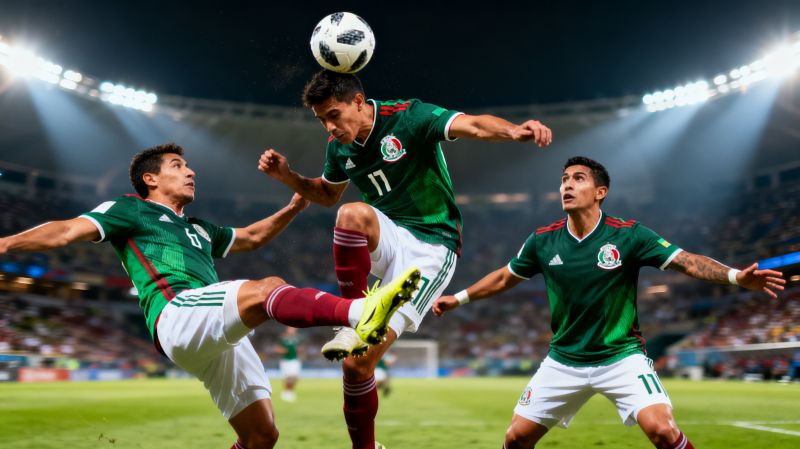
Why does a nation with such a passionate fan base and a deep football culture consistently fall short at the highest level?Observers often point to structural issues in Liga MX. The league's short tournaments and playoff format reward immediate results over long-term player development. Young Mexican talents like Hirving Lozano and Raúl Jiménez have thrived in Europe, yet the domestic pipeline struggles to produce elite defenders and midfielders at the same rate. The Mexican football team's reliance on a few key players—Lozano's pace, Guillermo Ochoa's shot-stopping—creates a fragile dependency. When Ochoa, arguably the team's most consistent performer across three World Cups, has an off day。the defense often unravels.There's a cultural weight to the Mexican football team that goes beyond tactics. The jersey carries the hopes of a country where football is a primary social glue. That pressure can be paralyzing. In 2015, after a disappointing Copa América, then-coach Miguel Herrera was fired following an altercation with a journalist—a moment that reflected the intense scrutiny and emotional volatility surrounding the team. Yet the fans remain fiercely loyal. Estadio Azteca。with its altitude and intimidating atmosphere, remains a fortress. The 'Grita México' chant—controversial for its homophobic origins—has been partially banned, forcing a reckoning with fan culture that mirrors broader societal debates.Looking ahead, the 2026 World Cup。co-hosted by Mexico, the United States, and Canada, presents both an opportunity and a trap. Hosting can galvanize a team, as it did in 1970 and 1986. But it can also mask underlying flaws. For the Mexican football team to finally break the quarterfinal ceiling, the focus must shift from short-term tournament results to systemic reform: longer league seasons, better youth coaching, and a willingness to challenge the status quo. The talent is there—players like Santiago Giménez and Edson Álvarez are proof. The question is whether the federation and the league can build an environment that turns flashes of brilliance into sustained success. Until then, El Tri will remain one of football's most fascinating enigmas: a team that can beat anyone on a given day but rarely strings together the consistency needed to win it all.